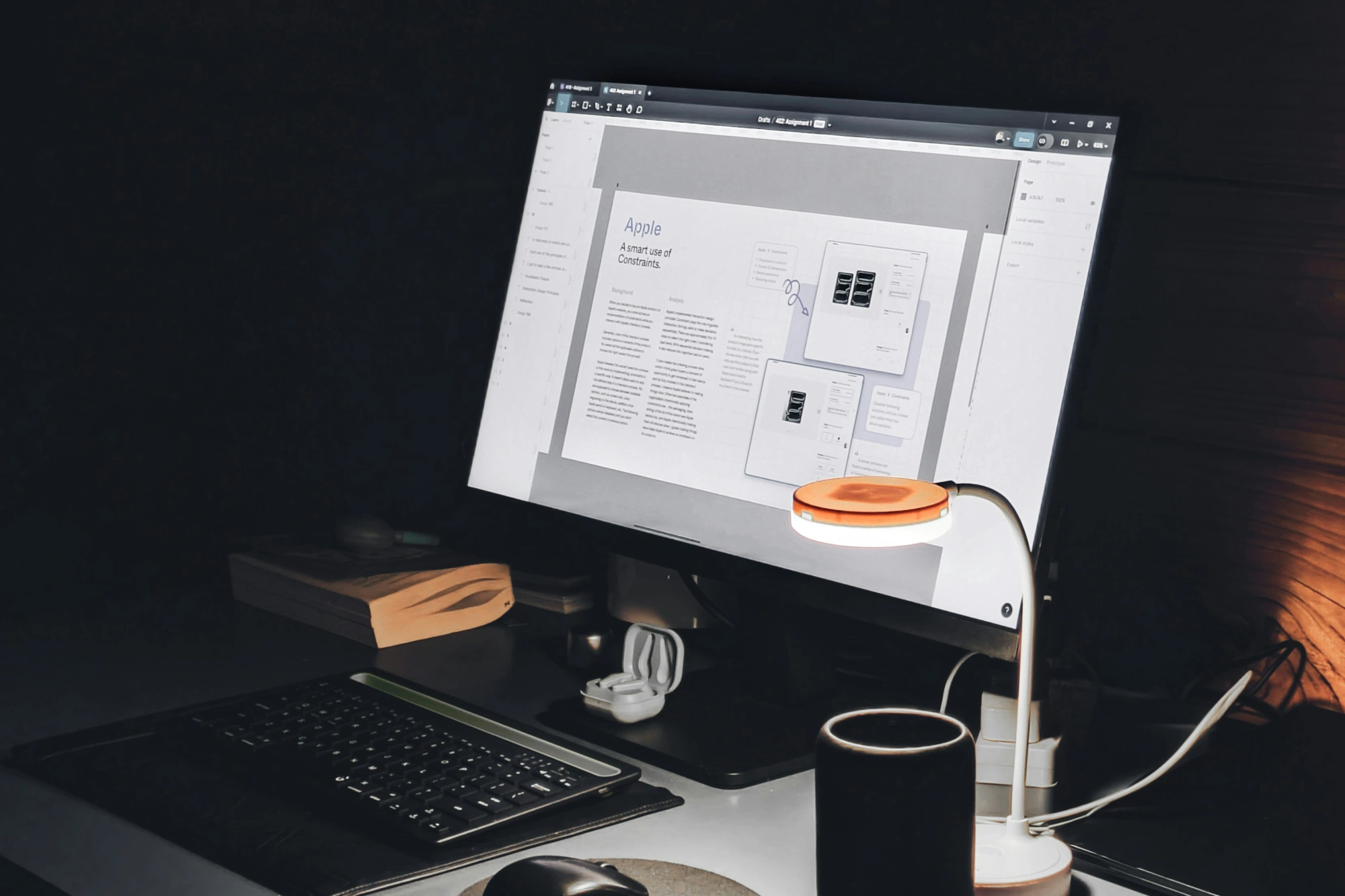
When talking about job interviews for UX positions, we often discuss how to make an incredible impression and how to negotiate the right salary. But that is only one part of the story. The other part is being prepared, asking questions, and listening carefully.
Below, we have collected several useful resources about UX job interviews — from job boards to Notion templates and practical guides. We hope they will be useful to you or your colleagues.
Design Interview Kit
When preparing for that interview, use the Design Interview Kit on Figma — a useful practical guide covering how to create case studies, solve design challenges, write cover letters, present your portfolio, and negotiate an offer. Kindly shared by Oliver Engel.

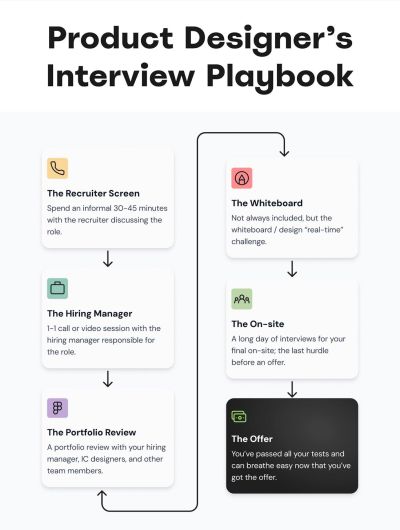
The Product Designer’s Job Interview Playbook (PDF)
The Product Designer’s Job Interview Playbook (PDF) is a practical short guide for designers that walks through every stage of the interview process, with helpful tips and strategies on what to keep in mind, what topics to cover, what questions to ask, which red flags to watch for, and how to tell a compelling story about yourself and your work. Kindly prepared by Meghan Logan.
For our part, we can only sincerely recommend not talking only about your design process. Tell stories about the impact your design work created. Frame your design work as a way to achieve business goals and meet user needs. And include insights about the impact you created — on business goals, processes, team culture, planning, metrics, and testing.
Also, be very clear about the position you are applying for. In many companies, titles matter. There are major differences between the responsibilities and salaries of designers at different levels, so if you consider yourself a senior specialist, check whether that is truly reflected in the role.
Guide to Successful UX Job Interviews (+ Notion template)
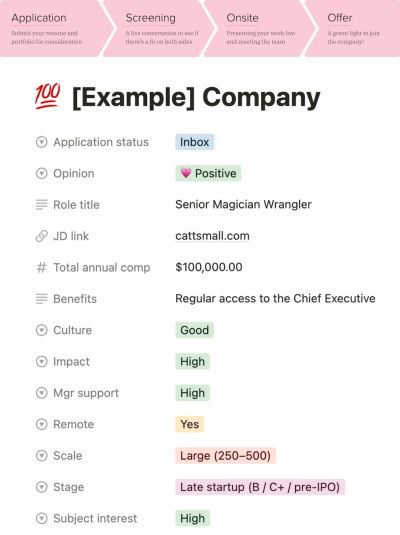
Catt Small’s Guide to Successful UX Job Interviews is a wonderful practical series about how to build a referral pipeline, apply for a job, prepare for screening calls and interviews, present your work, and manage salary expectations. You can also download the Notion template.
30 useful questions to ask during a UX job interview
In her wonderful article, Nati Asher suggested many useful questions to ask during a job interview when applying for a UX role. We took the liberty of reviewing some of them and adding a few more questions that may be worth considering for your next job interview.

- What are the biggest challenges the team is facing right now?
- What are the team’s main strengths and weaknesses?
- What qualities and skills will help me succeed in this role?
- Where is the company heading over the next 5 years?
- What achievements should I aim for during the first 90 days?
- What would make you think, “I’m so glad we hired X!”?
- Do you have any doubts or concerns about my fit for this role?
- Does the team have a budget for training, research, and so on?
- What is the team’s onboarding process?
- Who is on the team, and how long have they been there?
- Who are the main stakeholders I will work with day to day?
- What opportunities do you have for user research and access to users or data?
- Are there analytics, recordings, or other data sources available to review?
- How is the impact of design work measured in your company?
- To what extent does leadership understand the ROI of good UX?
- How does UX contribute strategically to the company’s success?
- Who makes the final design decision, and who decides what gets shipped?
- Which part of the design process does the team spend the most time on?
- How many projects do designers work on at the same time?
- How has the organization overcome challenges related to remote work?
- Do we have a design system, and what is its current state?
- Why does the company want to hire a UX designer?
- How would you describe the ideal candidate for this role?
- What does the career path look like in this role?
- How will my work be evaluated in this role?
- How long does it take to launch projects? Could you share some examples?
- What are the upcoming projects that need to be addressed?
- How do you see the design team growing in the future?
- What qualities help someone succeed on this team?
- What is the most challenging part of leading the design team?
- How does the company ensure that it lives up to its values?
Before a job interview, prepare your questions. They will not only show that you care about the process and culture, but also that you understand what it takes to succeed. And that small detail can make a big difference.
Don’t forget the STAR method
Interviewers closer to the business side will expect you to present examples of your work using the STAR method — Situation, Task, Action, Result — and they may feel completely lost if you dive into every tiny detail of your ideation process or the reasoning behind your chosen UX methods.
- S (Situation): Set the scene and provide the necessary details.
- T (Task): Explain your responsibilities in that situation.
- A (Action): Explain what actions you took to solve the problem.
- R (Result): Share the outcomes you achieved through your actions.
As Meghan suggests, the interview is about how your skills bring value to the problem the company is currently trying to solve. So ask about current problems and tasks. Interview the person interviewing you — but also explain who you are, what your core areas are, what motivates you, and how you and your expertise would fit the product and the organization.
To wrap up
One final note from us: never take rejection personally. Very often, the reasons you are given for rejection are only a small part of a much larger picture — and may have almost nothing to do with you. The job description may not have been entirely accurate, the company may be restructuring, or finances may ultimately be too tight.
Don’t get discouraged, and keep going. Write down your expectations. Job titles matter: think carefully about them and about your level of experience. Prepare good references. Have questions ready for that job interview. As Catt Small says, “once you get your foot in the door, you have to open it wide.”
You are a bright, shining star — never forget that.


.webp)
.webp)
.webp)
.webp)
.webp)