
Neurodivergent needs are often treated as edge cases that do not fit into standard user journeys or processes. In the design process, neurodiversity is often ignored. Or it is addressed late, and only if there is enough time left.
But people are not edge cases. Every person is simply different, completing tasks and navigating the web in different ways. So how can we create better, more inclusive experiences that support different needs and ultimately benefit everyone? Let’s take a closer look.
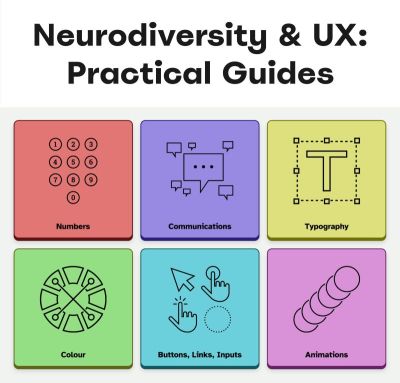
Neurodiversity or neurodivergence?
There is quite a bit of confusion online around both terms. Different people think and experience the world differently, and neurodiversity sees these differences as natural variations rather than deficits. It distinguishes between neurotypical and neurodivergent people.
- Neurotypical people experience the world in a “typical” way that is widely accepted as expected.
- Neurodivergent people experience the world differently, for example people with ADHD, dyslexia, dyscalculia, synaesthesia, and hyperlexia.
According to various sources, around 15–40% of the population has neurodivergent traits. These traits can be innate, such as autism, or acquired, such as trauma. But they always exist on a spectrum and vary greatly. A person with autism is not neurodiverse — they are neurodivergent.
One of the key strengths of neurodivergent people is their imagination and creativity, and their ability to quickly come up with unconventional ideas. They often show exceptional focus, strong long-term memory, a unique perspective, unmatched precision, and a strong sense of justice and fairness.
Being different in a world that still, to some extent, does not accept these differences is exhausting. So it is no surprise that neurodivergent people often show determination, resilience, and a high level of empathy.
Design with people, not for them
As designers, we often see ourselves as road builders. We create reliable paths for people so they can comfortably reach their goals. No obstacles. No confusion. No lock-in.
This means respecting the simple fact that people’s needs, tasks, and user journeys are different and change over time. Most importantly, it means considering them very early in the process.
Better accessibility is better for everyone. Instead of making decisions that later need to be reversed or improved to meet requirements, we can involve a diverse group of people in the process — people with accessibility needs, neurodivergent people, frequent and occasional users, experts, beginners — and design with them, not for them.
Neurodiversity and inclusive design resources
A wonderful resource for designing with cognitive accessibility in mind is Stéphanie Walter’s Neurodiversity and UX toolkit. It offers practical guidelines, tools, and resources to help you better understand and design for dyslexia, dyscalculia, autism, and ADHD.
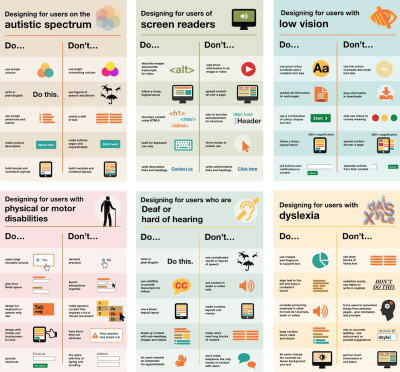
Another fantastic resource is Will Soward’s Neurodiversity Design System. It brings neurodiversity and user experience design together into a set of design standards and principles you can use to create accessible learning interfaces.
Finally, over the past few years we have prepared several summaries on neurodiversity and inclusive design, so you may find them useful too:


.webp)
.webp)
.webp)
.webp)
.webp)